Differences between Industrial, Mobile, Transport and Agriculture
Industrial, Transport, Agricultrual and mobile hydraulic systems share the same basic physical characteristics, that is using pressurized, fluid to transmit power.
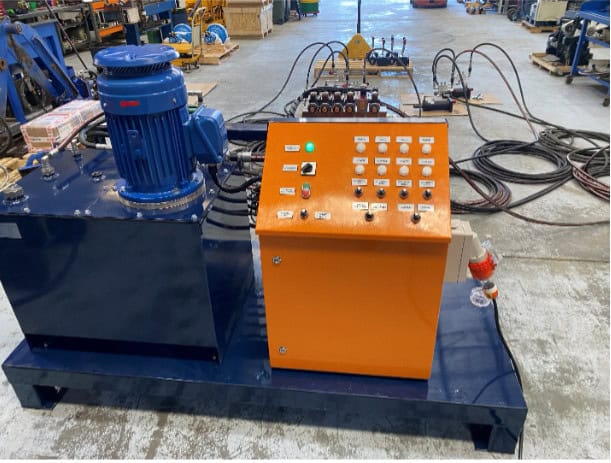
Industrial hydraulics are usually designed for stationary, more controlled environments such as presses, injection molders, and factory automation where precision, duty cycle, noise control, and long service life all matter.
Transport systems are generally designed for low weight, simplicity, basic functionalaity, and low duty cylcle requirements. Typical application, Drill rigs, Winches and controls, Simple Tip Truck solutions, Vechile mounted Cranes.
Agricultural systems are built into field machines such as trucks, tractors, harvesters, trailers and lifts where compact solutions, ruggedness, variable ambient conditions, weight and power constraints are primary drivers.
Mobile systems, Construction machinery, Drilling and Tunnelling machinery, use very sophisticated system, generally employing several systems on the one piece of equipment. These will often employ multiple pumps, generally high-pressure variable displacement loads sensed controls, interfaced with and operating in conjunction with complex electronic control systems.
While all hydraulic systems use the same theory, they all use the same basic components, a prime mover, pump, control valves to control linear or rotary actuators. These components are designed to suit specific application, thus can be classified into Transport, Industrial components, etc.
At Statewide Hydraulics we understand all sectors of hydraulic industry, either suppling new systems, plant modification, repair and service work.
Statewide Hydraulics offers Design, Manufacture, Installation, Component Supply, and servicing solutions across all these fields. We mix and match products from various groups to arrive at positive outcomes for your application. Below is a list of components or brands from specific product groups. We take the time to ask questions, and understand your application or problem and offer cost effective solutions.
Key Differences.
- Duty Cycle; Continuous Verses Intermittent
- Environmental conditions; Pharmaceutical manufacture Verses Mine site and anything in between.
- Power Source; Fixed speed Electric motors Verses Engine and PTO drives Verses Battery powered DC Power Units.
- Components style; Proportional, Servo, Stackable, Cartridge, Low-cost Mobile valves, & Valves and controls specifically customized for different functions and Industries.
- Examples; Sun Cartridge valves, Hydreco, Pumps, PTO’s, controls and valves for the transport industry.