
Creating concise guidance
Industrial hydraulic systems overview
Industrial hydraulic systems deliver high force and precise motion across manufacturing, mobile equipment, and specialised machinery. These systems depend on robust power units, standardized control components, carefully designed manifolds, and selected cartridge valve solutions to meet uptime, safety, and performance requirements.
Power units and what to specify
- Function and layout
- Skid or frame mounted power unit with integrated reservoir, filtration, cooler, suction strainer, pump(s), prime mover, and control valving.
- Hydraulic circuit components to specify
- Reservoir: working volume, baffling, breathers, sight glass; specify deaeration and thermal management.
- Filtration: suction strainer, pressure-side filter, return-line filtration, and off-line filtration for high cleanliness targets.
- Cooling: heat exchanger sizing to manage continuous and peak thermal loads.
- Pumps and drives: axial/radial/gear pumps or variable-displacement piston pumps with options for VFD or electro-hydraulic control.
- Accumulators and energy-recovery: where shock absorption, peak shaving, or emergency holds are required.
- Instrumentation and safety: pressure gauges, temperature sensors, level switches, solenoid/pilot isolation and emergency-stop interfaces.
- Controls and energy efficiency
- Variable-displacement piston pumps with load-sensing or pressure-compensated control for multi-axis systems needing efficiency and tight control.
- Variable-speed electric drives and soft-starts to reduce electrical and hydraulic losses during light-load or idle periods.
- Serviceability and spares strategy
- Modular power units that allow pump, motor, or control swaps with minimum plumbing work; keep critical spares (filters, seals, common cartridges) matched to the unit.
Manifold designs and benefits
- Monoblock and sandwich-plate manifolds
- Monoblock: machined single-piece manifolds for high-flow, low-leakage applications where compact plumbing and stiffness are priorities.
- Sandwich-plate (CETOP stack): stackable valve bodies between pump and actuator ports for modular functionality, simplified electrical/pneumatic routing, and fast service.
- Integrated cartridge manifolds
- Combine valve functionality in machined cavities using cartridge valves for compactness and flexibility.
- Reduce external hoses and leak points, shorten flow paths, and centralize maintenance access.
- Design considerations
- Flow path optimisation to avoid unnecessary bends and pressure drops.
- Porting and cavity layout that supports test points, isolation valves, and bypass paths for commissioning and maintenance.
- Material, surface finish, and sealing groove tolerances sized for operating pressure, fluid, and temperature.
- Service and spares advantages
- Standardised cavity patterns and cartridge families reduce inventory; manifold-mounted sub-assemblies permit hot-swap replacements of functional modules.
Sun cartridge valve solutions and how to use them
- Core strengths
- Compact, modular cartridge valves providing functions such as relief, check, sequence, load-hold, directional control, and proportional metering in a small footprint.
- Wide range of pressure and flow ratings and many pre-engineered functional variants that suit retrofit and new-manifold designs.
- Common functional cartridges
- Relief and pressure control: scalable, often with external adjustment or pilot options.
- Load-sense and priority: enable efficient pump control and prioritise critical circuits.
- Proportional cartridges: pilot-operated proportional control for smooth, proportional motion without large external valve bodies.
- Sequence and check cartridges: for staged operations and reliable load holding.
- Integration tips
- Design manifold cavities to Sun standard cavity footprints where possible for interchangeability and supplier-agnostic spares.
- Use cartridge-based test and isolation cavities to allow in-situ troubleshooting without major disassembly.
- Combine cartridge proportional control with local pressure-compensated metering to stabilise flows during variable loads.
- Selection and sizing
- Verify flow capacity, pressure drop, and response time against actuator demand; choose pilot sizes and orifice options appropriate for system pilot supply and desired bandwidth.
- Specify cartridge valve materials and seals for fluid type and temperature extremes to prevent premature wear.
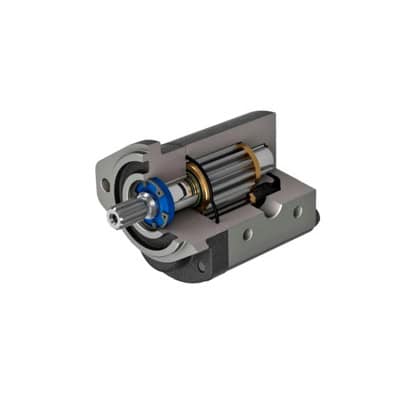
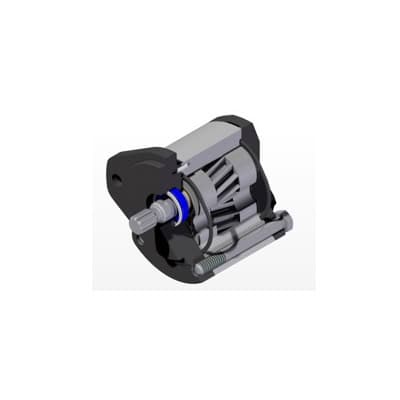
Comparing CETOP valve stacks, cartridge manifolds, and Sun cartridge solutions
Attribute | CETOP valve stacks | Cartridge manifolds | Sun cartridge solutions |
|---|---|---|---|
Modularity | High; standard stackable interfaces | High; cavities configurable | Very high; broad cartridge family |
External plumbing | Moderate; some hoses still needed | Low; many hoses eliminated | Low; fits directly into cavities |
Service speed | Fast for stack replacement | Fast for module swap | Fast cartridge-level swap |
Compactness | Medium | High | Very high |
Control options | Wide, including proportional stacks | Wide, depends on cartridge chosen | Very wide; many off-the-shelf functions |
Leakage points | Moderate | Low | Low |
Spare parts complexity | Multiple OEM parts | Fewer, cavity-based spares | Minimal if cavities match cartridges |
Sources: use manufacturer’s cavity standards and product literature when finalising designs.
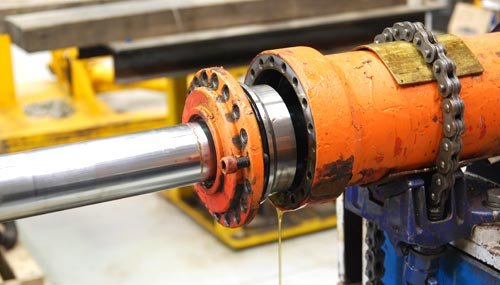
Practical guidance for specification, retrofit, and upgrades
- Map functions and duty cycles before deciding which circuits need industrial-grade piston pumps, CETOP stacks, or cartridge solutions.
- Use industrial power units (skid-mounted with filtration and cooled reservoirs) for duty-critical axes; consider gear pumps only for low-pressure or intermittent circuits.
- Prefer cartridge manifolds or CETOP sandwich stacks where you need low external plumbing, quick servicing, and simplified spares management.
- Use Sun cartridge valves when you require high functional density, rapid iteration in function layout, or compact proportional control close to the actuator.
- Design pilot supply and bleed paths to match cartridge pilot flow needs and avoid instability from undersized pilot supplies.
- Plan for condition monitoring ports and sampling points on the power unit and manifold to support predictive maintenance.
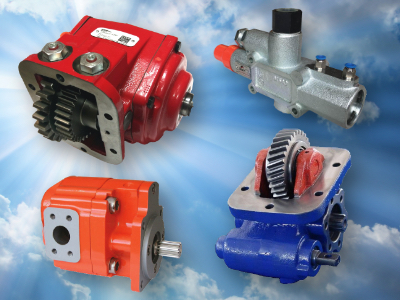
Practical checklist for procurement and engineering
- Power unit: specify pump type, displacement control method, reservoir size, filtration target (ISO cleanliness), cooling capacity, and instrumentation.
- Manifold: choose monoblock, sandwich-plate, or cartridge manifold by prioritising flow, footprint, and service access.
- Valve standard: confirm CETOP size or cartridge cavity pattern early for spares commonality.
- Cartridge valves: list required functions, flow rates, pressure ratings, pilot requirements, and preferred manufacturer family.
- Materials and seals: select materials and seal compounds matched to the hydraulic fluid and ambient/operating temperatures.
- Serviceability: ensure local isolation, test points, and replaceable sub-assemblies are included in the design.
- Controls integration: define electrical/pilot interfaces, proportional amplifier requirements, and safety interlocks up front.
- Lifecycle cost: evaluate energy use, maintenance intervals, downtime cost, and spare-part strategy, not just initial capital cost.